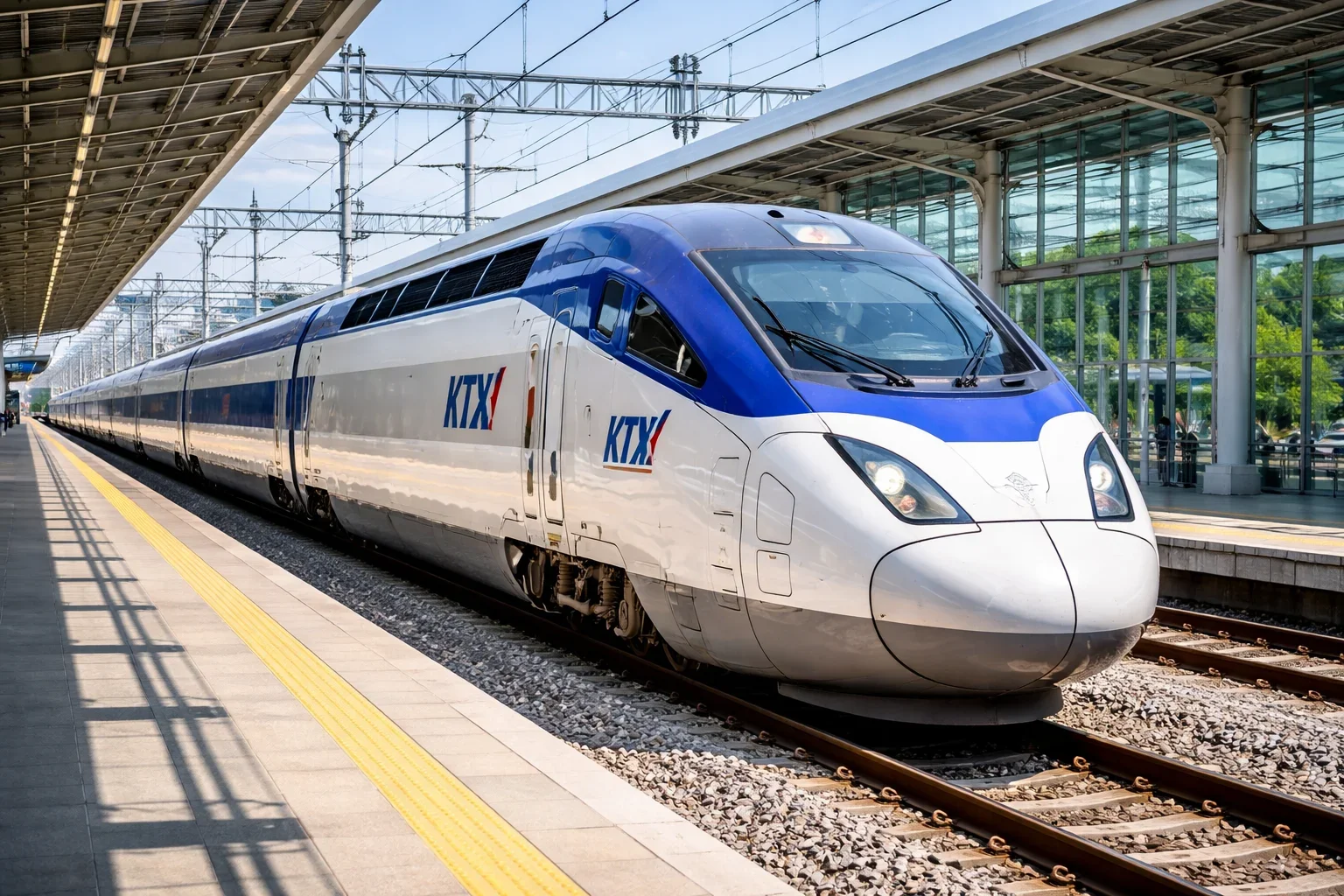
If you are planning to ride Korea's high-speed trains, here is something worth knowing: seats are getting harder to find. A recent report by the Hankook Ilbo (published in The Korea Times, October 2026) describes a growing squeeze on high-speed rail, and travelers are part of the story.
What is happening
The government is preparing the second phase of relocating central agencies to Sejong (세종), the administrative city. Nearly 3,000 civil servants are expected to move next year alone. Many will keep living in Seoul at first, partly because of their children's schooling, so they will commute by train. Commuter buses are one option, but the bus from Seoul's Gangnam Express Bus Terminal takes almost two hours, so many officials will prefer rail.
Officials say a same-day ticket on the Suseo–Osong route (the SRT line serving Gangnam) is virtually impossible to get at any hour. At rush hour, even the passageways between cars are packed. Tickets open a month in advance, and commuters say that if you miss the window, you may arrive late to work.
Why trains are so full
- Medical trips. People from across the country travel to Seoul for treatment at major hospitals near Suseo Station.
- Independent foreign travelers. According to KORAIL, foreign rail passengers rose from 3.44 million in 2023 to 6.06 million in 2025, about 80% in two years.
- Osong Station growth. Osong (오송) in Cheongju (청주) handled 9.53 million passenger movements last year. With 7.42 million through September this year, it is on course to pass 10 million.
Will it get better?
The Ministry of Land, Infrastructure and Transport plans to add a second set of double tracks on the Pyeongtaek–Osong corridor. Daily one-way train movements on that section would rise from 179 to 237. But the opening, first planned for late 2027, has slipped to 2028, so don't expect relief soon.
What we recommend for travelers
- Book as early as tickets open, about a month before departure, especially for Friday and Sunday trips and morning departures.
- Avoid commuter rush hours on routes that touch Seoul, Osong and Sejong.
- Have a backup: an express bus, or a transfer arranged in advance.
- Consider a guided trip. On our programs, rail tickets and transfers are handled for you, with no language barrier or last-minute scrambling.
For example, the Seoul–Gyeongju high-speed train takes about 2.5 hours, and it is far more comfortable than a long bus ride. Just reserve early.
Reach Gyeongju from Seoul by high-speed train in about 2.5 hours, traveling at speeds of over 300 km/h — with no exhausting long bus transfer and no complicated logistics.
Travel from Gyeongju to Seoul by high-speed train in about 2.5 hours, at speeds of over 300 km/h — without an exhausting long bus transfer or complicated logistics.