Korea has long been a destination for beauty treatments and cosmetic procedures, but a quieter revolution has been reshaping the country's medical landscape: world-class preventive health programmes that combine rigorous diagnostics, regenerative medicine, and five-star hospitality in a single visit.
We recently walked through one of Seoul's leading private wellness clinics — a multi-floor centre where foreign guests can go from full-body imaging to a stem cell consultation, a personalised fitness prescription, and a rooftop dinner, all without leaving the building. Here is what we found.
Three Levels of Health Screening
The clinic structures its programmes around three distinct tiers of examination. Understanding which tier is right for you is the first step to planning your visit.
Tier | Name | What it checks |
|---|---|---|
1 | Standard Screening | Current disease status — CT, X-ray, MRI, endoscopy, ultrasound. Are you ill right now? |
2 | Anti-Ageing / Grey Zone | Immune levels, heavy metal load, metabolic rate, and other markers that predict future disease risk before symptoms appear. |
3 | DNA Profiling | Inherited disease tendencies (family-history conditions) and lifestyle genetics — caffeine sensitivity, yo-yo weight risk, aerobic vs. strength response. |
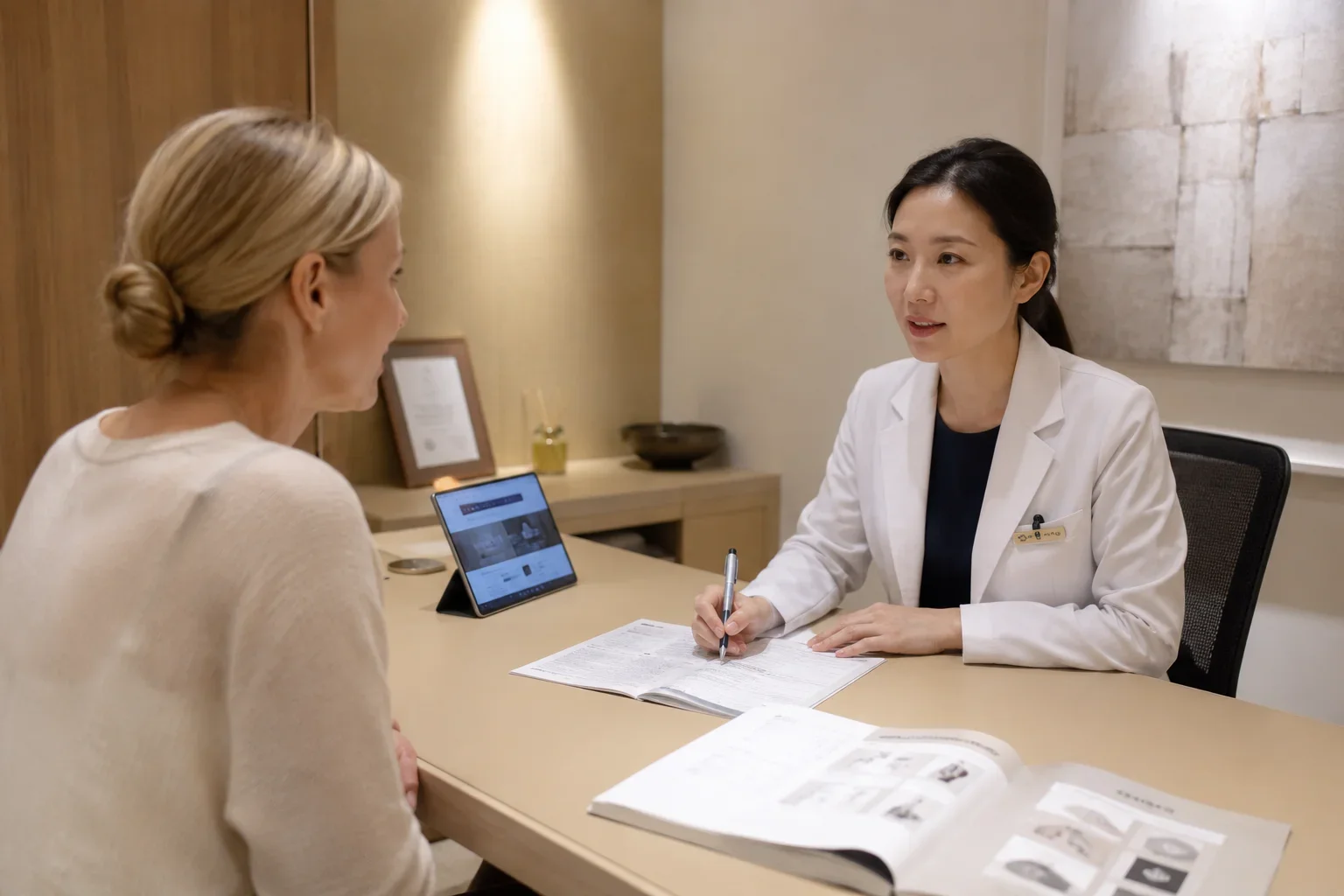
The real value, as the clinic team explained to us, is not in any single test — you can order a DNA kit online — but in the total solution: a professor-led consultation before the check-up customises the baseline panel for your personal history (surgical history, family conditions, existing diagnoses), and a follow-up session maps all three tiers of results into a concrete, personalised health plan.
The "Grey Zone" Concept
One phrase stuck with us: "no one is fully healthy, and no one is fully sick." The grey zone is the space most of us occupy — and it is precisely that space the second-tier tests are designed to illuminate.
Immune function panel, heavy metal analysis, metabolic benchmarking — these are not treatments. They are early-warning signals. A low immune index today is not a diagnosis; it is a reason to act before a diagnosis becomes necessary. This preventive framing is at the heart of what separates premium Korean medical tourism from a standard annual check-up.
Stem Cell Banking: Why Koreans Store at 20
One of the most striking services on offer is fat-derived and immune-derived stem cell banking — long-term cryogenic storage (20 years for fat stem cells, 30 years for immune stem cells) intended as a biological insurance policy.
The science behind the timing is straightforward: stem cells peak in quantity and quality around the age of 20, then begin a slow, steady decline. Banking them at peak condition — ideally before that decline starts — maximises their therapeutic value for future use, whether for disease treatment or anti-ageing protocols.
In Korea, regulatory frameworks currently limit certain clinical applications of stored stem cells, but legislation is evolving. The clinic positions banking as forward-looking: "You insure your car before an accident. Why not insure your health before a diagnosis?" Clients who no longer wish to maintain storage can opt to discard their cells or donate them for approved clinical research.
Mitochondria-Based Skin Therapy: Something You Won't Find Elsewhere
Beyond internal medicine, the clinic's beauty floor offers a treatment that genuinely surprised us: a mitochondria-targeted skin therapy using cells extracted from the patient's own blood or tissue. The underlying logic is sound — skin ageing accelerates when the mitochondria inside skin cells lose energy-production capacity. Restoring that capacity at a cellular level, rather than filling or lifting the skin from outside, represents a meaningfully different approach.
The effects last around six months per session, and the clinic notes that regular clients often schedule two treatments per year.
What a Typical Visit Looks Like
Most foreign guests stay two to seven days. The check-up itself typically runs across floors 2 and 3 of the building. Imaging (CT, MRI, X-ray) takes place in a dedicated radiology suite; all other examinations — endoscopy, ultrasound, blood panels, skin consultations — happen in the guest's own room or an adjacent suite, minimising movement. After results are reviewed, guests move to the Health Life Centre on upper floors for personalised fitness prescription and, if desired, physiotherapy.
The clinic works with a partner hospital network (including a major university hospital system) for cases requiring surgery or tissue biopsy — so if imaging reveals something that needs specialist follow-up, the referral pathway is already in place.
Booking lead time: The clinic recommends reserving at least one month in advance, particularly for groups. Last-minute bookings (one week or less) can often be accommodated but may not have all programme slots available simultaneously.
The Hotel Component
For international guests, the programme includes a hotel room inside the same building — ranging from Deluxe to Suite configurations. Rooms are equipped with premium bedding, Dyson hairdryers, Molton Brown amenities, and panoramic city views. Breakfast (Korean set or brunch) is delivered as in-room service. A rooftop restaurant hosts live jazz every Friday evening.
Couples booking together receive one room per check-up package; upgrading both individual Deluxe rooms to a single Suite costs an additional fee per night — worth asking about when you enquire.
Practical Notes for International Visitors
- Visa: Russian passport holders currently enter Korea visa-free. Visitors from Ukraine and some other countries require a visa, which typically takes around one month to process. The clinic can provide the necessary invitation documents; the application itself must be submitted at the relevant consulate.
- Language: The clinic regularly hosts Russian-speaking and European guests and is experienced in coordinating through interpreters. INTE can assist with all pre-arrival communication.
- Groups and corporate clients: The clinic welcomes group bookings for wellness programmes, beauty treatments, and medical check-ups. Pricing is identical regardless of group size or booking channel. Large group cancellations (10+ people) may incur a penalty fee.
- Fertility and reproductive health screening is available as a standalone add-on — hormone balance panels, ovarian reserve testing, and sperm analysis — appealing to guests in their 30s and 40s. Results typically take about one week, so this pairs well with a multi-day visit.
Is This Right for You?
Premium Korean medical tourism is not for every traveller — but if you are in your 30s or older, have a family history of chronic illness, or simply want a baseline that goes deeper than an annual GP visit, the combination of comprehensive diagnostics, personalised planning, and the infrastructure of a luxury stay makes Seoul a genuinely compelling destination.
We are happy to help you plan the medical component alongside the rest of your Korea itinerary — reach out and we will match you with the right programme for your needs and schedule.