Private multi-day tour

2 Days: Busan and Gyeungju

Discover two Korean capitals in two days: ancient Gyeongju with its UNESCO sites and vibrant Busan with its amazing art districts and breathtaking panoramas.

2 days Busan
From$1,171.00per person
2 days
Duration
INTE What we love about this journey

Hundreds of thousands of nobles, craftsmen, and townspeople once lived here... Now, visitors take souvenir selfies against the backdrop of countless burial mounds and a quaint ancient observatory. A forest path along the edge of a mountain cliff leads to the Seokguram Grotto, where worshippers prostrate themselves before the work of 8th-century masters...

The pace quickens – you're already in Korea's maritime capital, where the lively chatter of fish market vendors, with their characteristic Busan accents and images of wondrous treasures from the depths, gives way to magnificent bird's-eye views from a cable car cabin.

Two days, connecting Korea's present and past in a single journey.

Features

Why this tour

  • Licensed Guide OnlySure, you can follow influencers — but only licensed guides in Korea are allowed to legally accompany tourists. That means better access, fewer risks, and no awkward surprises during your trip

Day by day

Your itinerary, day by day

  1. You are welcome to arrive in Korea before the official start of the program. Upon request, we can assist with booking extra nights at the hotel prior to the tour.

    The tour can start from your hotel in Busan or Gyeongju, or from Gyeongju Station.

    Ancient capital of Korea Gyeongju city tour

    09:00 · duration, hours: approximately 8

    The city of Gyeongju, the ancient capital of the Korean state of Silla, is famous for its monuments included in the UNESCO world heritage: burial mounds, ancient Buddhist monasteries, and the artificial grotto Seokguram.

    Gyeongju is also a unique national park. Korea's only historical national park!

    Attention! If the tour ends before dusk, we visit the National Museum of Gyungju instead of the Eastern Palace.

    • Seokkuram

      The Buddha statue in this small temple in an artificial grotto is considered the most elegant in All of Korea! The grotto is located on the slope of Mount Tkhohamsan, where the winding serpentine of the mountain road leads.


      The walk to the temple through the mountain forest from the parking lot takes about 15-20 minutes; depending on the weather, either a mysterious foggy landscape awaits us (fogs are not uncommon on this mountain), or breathtaking bird's-eye views of the thousand-year-old Gyeongju.


      In the grotto, which is formally the hermitage of the Bulguksa temple, located below the slope, the dominant position is occupied by the above-mentioned statue of Buddha, sitting in a lotus position on a pedestal in the shape of a lotus. Around it at different heights are bas-reliefs and statues of bodhisattvas, arhats, Indra and Brahma, the Four Heavenly Kings.


      If the group agrees, we can go down the mountainside to the temple of Bulguksa.

    • Bulguksa

      The main Buddhist temple of United Silla, it is now a place of pilgrimage for many guests of Korea.

      The temple was built in 774 under the leadership of the premier of the state of Silla, Kim Taesong. Legend has it that Bulguksa was dedicated to the parents of the current, so to speak, Kim Taesong. While Seokguram, the temple-hermitage under Bulguksa, was intended for Kim Taesung's parents from his previous incarnations.

      In 1995, Bulguksa and Seokguram were inscribed on the UNESCO World Heritage List.

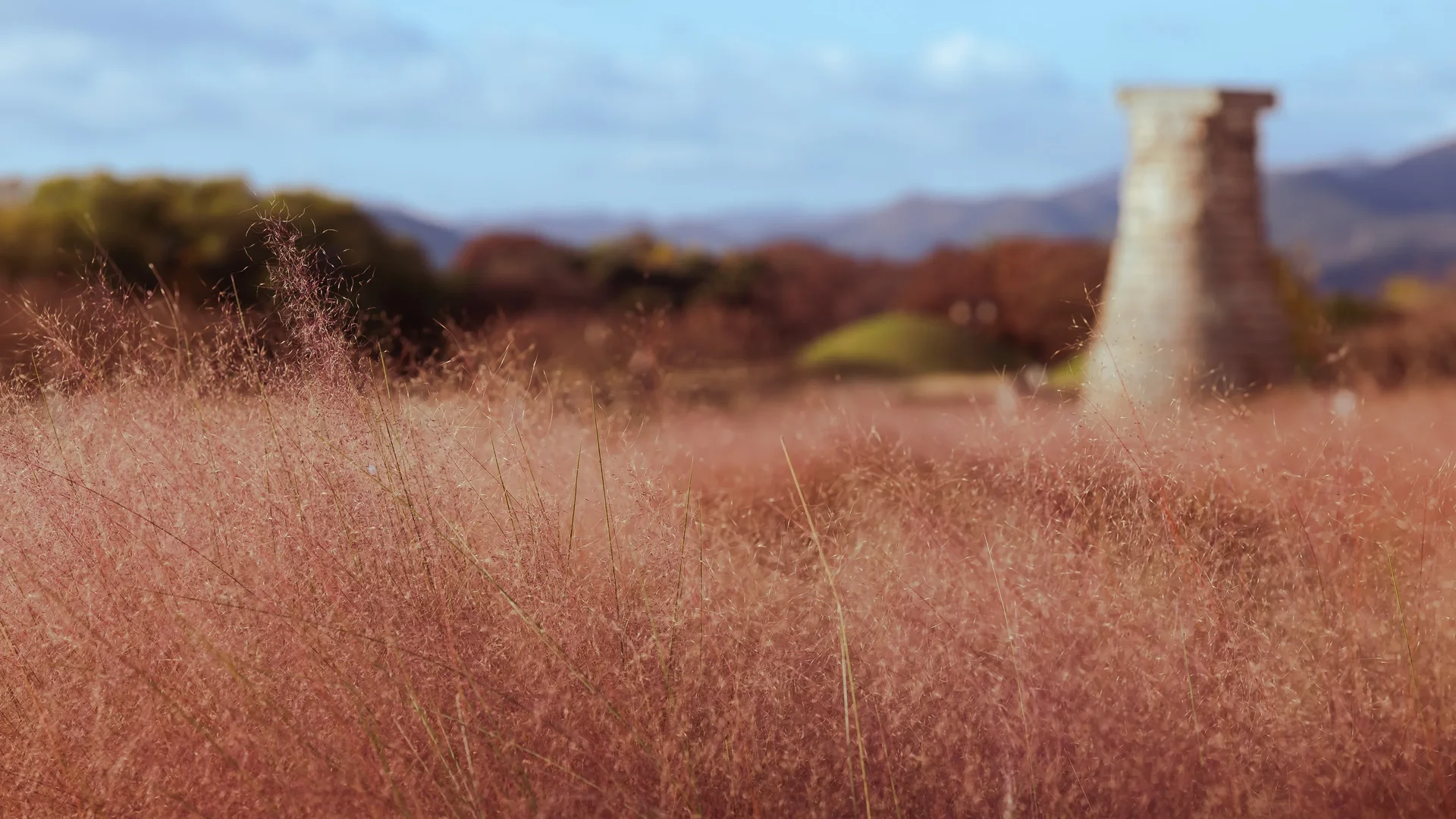
    • Cheomseongdae Ancient Observatory

      Cheomseongdae is one of the oldest observatories in the world (7th century). The tower of the observatory is full of symbolism: the total number of hewn stones from which it is built; the number of rows of these stones before and above the small window, the shape of the stones... Reasonable Silakians paid attention to everything.

      Cheomseongdae was built under the reigning Queen Seondok - one of three in the history of Silla. The queen ended up in a drama that, of course, was filmed in Gyeongju.

    • Heavenly Horse Mound

      The only mound which inner parts are open to the public (though filled with replicas, it shows the inner construction of a Shilla mound)

    • Bunhwangsa

      The main state Gyeongju temple from the Silla period, the "Temple of the Yellow Dragon", Hwanyeongsa, has not survived; however, we still have a unique opportunity to get acquainted with the pagoda of a hermitage temple of Hwanyeongsa. The hermitage temple is called Punghwansa.

      The peculiarity of the pagoda of Punghwansa is that it is built of stones, hewn in such a way that they resemble bricks in shape. What can you not do if you are not familiar with the technology (brick production, in this case)!

    • Donggung Palace and Wolji Pond

      Though made anew, it is a nice and quite picturesque place, especially at night.

Practicalities

What is included

Included

  • entrance fee
  • transfers as in daily schedule
  • breakfasts, if selected accommodation with breakfasts (BB)
  • accommodation in accordance with your selection
  • licensed guide

Not included

  • personal expenses and all other expenses not specified explicitly in the program

Where you go

Your route through Korea

Good to know

Frequently asked questions

For meals, budget around $20 per meal for lunch or dinner in a mid-range restaurant. For other daily expenses like transportation, shopping, and entrance fees to attractions, the amount will vary depending on your plans. It’s advisable to have some extra cash for unexpected expenses.
© 2026 INTE Tours 13+ Years Sharing Korea's Stories