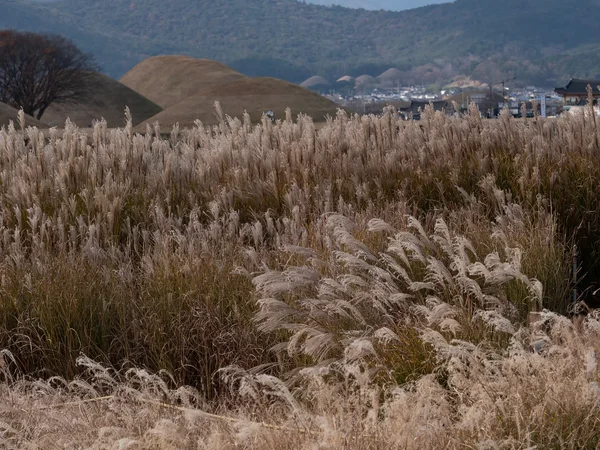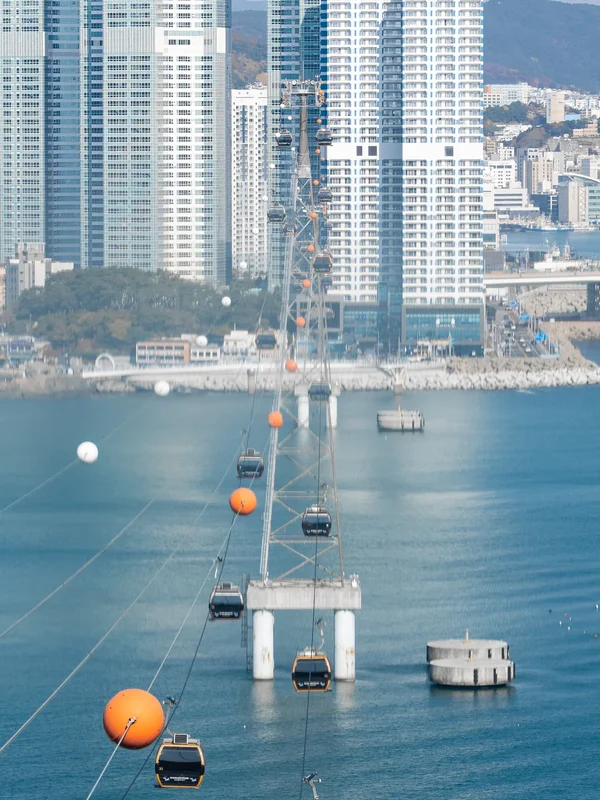
The sea and the slow pace of Busan. Gyeongju – a glimpse of ancient Korea. A high-speed train across the country. Free time to explore in Busan and Seoul.
Private multi-day tour
9-Day Route from Busan through Gyeongju to Seoul
Arrive in Busan — depart from Seoul. More time exploring Korea, less time on the road.
The journey
What you will see
Heavenly Horse Mound
Songdo Cable Car
Seoul City Hall
Features
Why this tour
- Licensed Guide OnlySure, you can follow influencers — but only licensed guides in Korea are allowed to legally accompany tourists. That means better access, fewer risks, and no awkward surprises during your trip
- Ride on KTX high-speed trainTravel long distances in comfort and style, saving time while enjoying a quintessential Korean experience.
- Thoughtfully paced itinerary without rushed or late-night transfersMore energy, less fatigue, and a consistently comfortable travel experience
Day by day
Your itinerary, day by day
- subject
You are welcome to arrive in Korea before the official start of the program. Upon request, we can assist with booking extra nights at the hotel prior to the tour.
subjectArrival transfer (optional). A private transfer from the airport to your hotel can be arranged upon request. A Korean-speaking driver will meet you at the airport with a name sign.
weekend Free day - place
Busan: the City of Pots Upside Down
09:00 · duration, hours: approximately 6
Today we are waiting for a journey through, perhaps, the most dynamic metropolis of South Korea. What awaits us in Busan?
The largest in South Korea Fish market, rich in all kinds of sea creatures, both processed and completely alive, Gamcheon Cultural Village, observation deck on the roof of a department store awarded the Guinness Book of Records, cable car over the sea! The beautiful Camellia Island and the meeting place of APEC 2005 presidents.
- placeGwangan BridgePass-by
A picturesque 2-storey bridge over the sea in Busan is one of its most exquiste landmarks.
- placeGamcheon Culture Village
A very piquturesque district in Busan, which was originally founded by some refugees during the Korean War.
- placeSongdo Cable Car
Exciting journey above the sea with eye-catching views of the coastal Busan.
- placeJagalchi Fish Market
The largest seafood market in Korea, where you can see all kinds of marine creatures, both from the plant and animal worlds (and from the border worlds too!).
You can also eat deliciously at the market: fried or raw fish, as well as seafood, is served at the table in numerous restaurants in the market.
If you prefer something less exotic, we recommend the food court at the Lotte department store next door. The observation deck at the department store offers a magnificent view of Busan from a bird's eye view.
- placeLotte Gwangbok Observatory and Fountain
Breathtaking views of downtown Busan from the seaside Lotte Department Store.
- placeHaeundae Beach; Camellia Island
Most popular beach in Busan and a vivid resort district.
- placeGwangan BridgePass-by
- place
The Temple of the Dragon Palace of the Country to the East of the Sea
09:00 · duration, hours: approximately 2
- placeHaedong Yonggungsa Buddhist Temple
The name of the temple literally translates to "Dragon Palace Temple of the Country East of the Sea", 해동용궁사 海東龍宮寺.
The construction of the temple was completed in the 2nd year of Wu-wang's reign in 1376.
The temple was built by the sea thanks to the prophetic dream of the founder of the temple, the teacher [king - van] Hegyn. In a dream, a Dragon appeared to him (whose responsibility includes the seas and oceans) and "advised" to build a temple on the seashore, devote himself entirely to prayers - and then the great drought that Korea suffered from would pass ... Initially, the temple was called Pomunsa.
The current name of the temple was given in the 1970s. The abbot responsible for the restoration of the temple named it so after the Bodhisattva of Mercy appeared to him in a dream.
placeAncient capital of Korea Gyeongju city tour
11:00 · duration, hours: approximately 8
The city of Gyeongju, the ancient capital of the Korean state of Silla, is famous for its monuments included in the UNESCO world heritage: burial mounds, ancient Buddhist monasteries, and the artificial grotto Seokguram.
Gyeongju is also a unique national park. Korea's only historical national park!
Attention! If the tour ends before dusk, we visit the National Museum of Gyungju instead of the Eastern Palace.
- placeSeokkuram
The Buddha statue in this small temple in an artificial grotto is considered the most elegant in All of Korea! The grotto is located on the slope of Mount Tkhohamsan, where the winding serpentine of the mountain road leads.
The walk to the temple through the mountain forest from the parking lot takes about 15-20 minutes; depending on the weather, either a mysterious foggy landscape awaits us (fogs are not uncommon on this mountain), or breathtaking bird's-eye views of the thousand-year-old Gyeongju.
In the grotto, which is formally the hermitage of the Bulguksa temple, located below the slope, the dominant position is occupied by the above-mentioned statue of Buddha, sitting in a lotus position on a pedestal in the shape of a lotus. Around it at different heights are bas-reliefs and statues of bodhisattvas, arhats, Indra and Brahma, the Four Heavenly Kings.
If the group agrees, we can go down the mountainside to the temple of Bulguksa. - placeBulguksa
The main Buddhist temple of United Silla, it is now a place of pilgrimage for many guests of Korea.
The temple was built in 774 under the leadership of the premier of the state of Silla, Kim Taesong. Legend has it that Bulguksa was dedicated to the parents of the current, so to speak, Kim Taesong. While Seokguram, the temple-hermitage under Bulguksa, was intended for Kim Taesung's parents from his previous incarnations.
In 1995, Bulguksa and Seokguram were inscribed on the UNESCO World Heritage List.
- placeCheomseongdae Ancient Observatory
Cheomseongdae is one of the oldest observatories in the world (7th century). The tower of the observatory is full of symbolism: the total number of hewn stones from which it is built; the number of rows of these stones before and above the small window, the shape of the stones... Reasonable Silakians paid attention to everything.
Cheomseongdae was built under the reigning Queen Seondok - one of three in the history of Silla. The queen ended up in a drama that, of course, was filmed in Gyeongju.
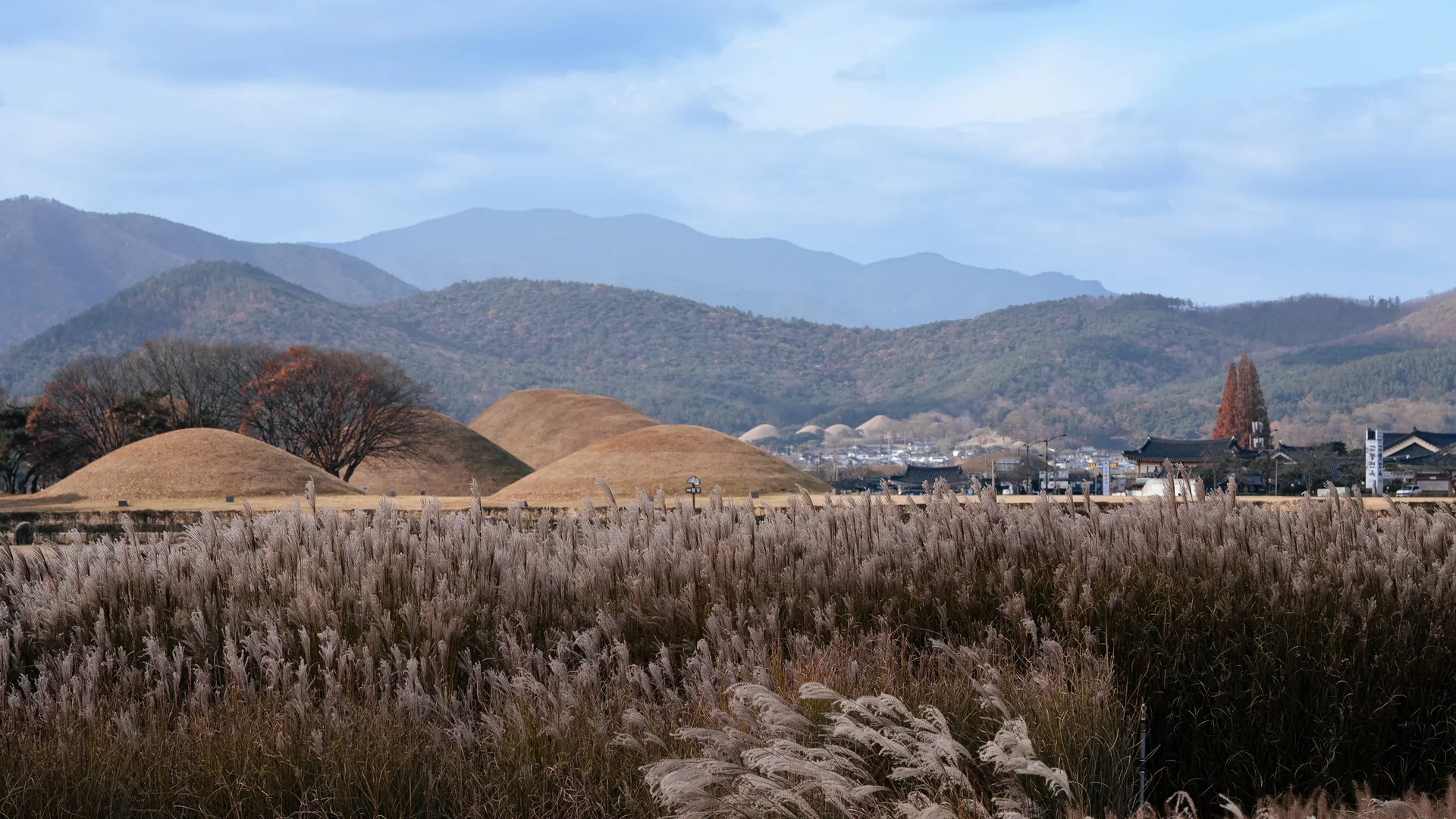
- placeHeavenly Horse Mound
The only mound which inner parts are open to the public (though filled with replicas, it shows the inner construction of a Shilla mound)
- placeBunhwangsa
The main state Gyeongju temple from the Silla period, the "Temple of the Yellow Dragon", Hwanyeongsa, has not survived; however, we still have a unique opportunity to get acquainted with the pagoda of a hermitage temple of Hwanyeongsa. The hermitage temple is called Punghwansa.
The peculiarity of the pagoda of Punghwansa is that it is built of stones, hewn in such a way that they resemble bricks in shape. What can you not do if you are not familiar with the technology (brick production, in this case)!
- placeDonggung Palace and Wolji Pond
Though made anew, it is a nice and quite picturesque place, especially at night.
- placeHaedong Yonggungsa Buddhist Temple
- weekend Free day
- person_remove
Transfer without guide hotel in Busan-Busan Station
16:30
placeKTX Busan-Seoul
18:00 · duration, hours: approximately 3
Busan-Seoul high-speed train. the journey at speeds sometimes exceeding 300 km/h will take about 3 hours
person_removeTransfer without guide Seoul Station-hotel in Seoul
20:00
- place
Seoul city tour (Historical Center)
09:00 · duration, hours: approximately 5
During an entertaining and informative tour, which combines short walks and moving on an ordered vehicle, we will get acquainted with the history and modernity of the capital of South Korea - Seoul. (On Tuesdays, the palace we visit is Changdeokgung, Gyungbokkung on other week days.)
- placeSeoul City Hall
A futuristic glass wave rises above the old City Hall, blending past and future in one bold design.
Powered by nature and home to the world’s largest indoor vertical garden, it’s one of Seoul’s greenest landmarks.
Open to visitors — step inside and see the living wall for yourself. - placeSeoul Anglican CathedralPass-by
In the heart of Seoul stands a hidden architectural gem — a cathedral first envisioned in the 1920s.
A British design, built with Korean devotion, but left unfinished during colonial rule. Then came the miracle: in 1993, the original blueprints were found in an English library.
Finally completed in 1996, the cathedral now stands in its full, intended glory — a story of faith, time, and perseverance. - placeCheonggyechon Stream
A blend of nature and urban design, this stream winds through downtown Seoul — though entirely man-made today.
Once a natural river, it was buried after the Korean War and revived in 2005 as a tranquil walkway.
Fountains, illuminated bridges, and the Palgakdam weir make it one of the city’s most beloved evening spots. - placeGreat King Sejong Avenue and the Gwanghwamun Square EnsemblePass-by
The complex of the central Gwanghwamun Square in front of the Gyeongbokgung Royal Palace, which is the compositional center of the capital of Korea, offers amazing views of Seoul: on one side is the main residence of the kings of the Joseon state (now a museum). But along the Sejong-daero Avenue, departing from the square, there are high-rise modern buildings: government, embassies, Kyobo - the largest bookstore in Korea. Further down the avenue we can see the Seoul City Hall and still further - the Great South Gate of Namdaemun (National Treasure No. 1).
- placeGyungbokgung Palace
The main palace of the Joseon dynasty — rebuilt more than once, but never lost its grandeur.
Its perfect symmetry, royal guard ceremony, and the chance to wear a hanbok turn your visit into a journey through time.
- placeSamchong-dong/Bukchon
Winding lanes, wooden hanoks, hidden cafés — this is where time slows down.
Samcheong-dong charms with its hills and galleries, while Bukchon preserves the everyday beauty of Joseon-era homes.
Together, they offer a quiet, romantic escape — a walk through history lined with soft light and gentle stories. - placeInsadong. Traditional teahouses, souvenirs, boutiques, galleries...
Insadong is famous for the abundance of souvenir shops, traditional restaurants and tea houses, boutiques.
Insadong-kil Pedestrian Street is the central street of the area.
Often you can see street performances - traditional Korean samul-nori percussion quartet or martial arts tekkyon, taekwon-do or performances of youth groups in the fusion style, etc.
- placeJogyesa Temple
In the heart of Seoul stands Jogyesa — the head temple of Korea’s largest Buddhist order.
Small in scale but rich in atmosphere, it changes with the seasons: lotus lanterns in spring, bright chrysanthemums in fall, and peaceful stillness in winter.
No matter the time of year, it’s a place of quiet reflection. - placeJongno Avenue and Posingak Bell PavilionPass-by
One of the central streets of Seoul, Jongno (literally "Bell Avenue") is named after the pavilion of the same name, which houses the main bell of the country. It is this bell that the best people of the country beat on New Year's Eve.
However, even mere mortals can hit it for good luck: at 12:00 noon, the pavilion is usually opened for visitors. However, a limited number of guests are allowed. - placeMyungdong
A bustling hub of shopping, street food, and K-beauty.
Amid the trendsetting stores stands Korea’s main Catholic cathedral — a striking symbol of faith and history.
Style meets soul in this lively part of Seoul.
- placeSeoul City Hall
- place
The Garden of Morning Calm
08:00 · duration, hours: approximately 2
The beauty of Korean nature and the beauty of human hands awaits us today in the unique private Garden of Morning Calm...
- placeThe Garden of Morning Calm
Garden of Morning Calm was founded by Mr. Han Sangkyeon in 1996. This private garden is rightfully recognized as one of the most beautiful in South Korea. The name comes from the poetic name of Korea - "Land of the Morning Calm". The founder and his team tried to introduce the natural beauty of Korea, the oriental mystique and the spirit of the Korean people to visitors.
The design of the garden focuses on curved lines, space, balance and asymmetry, unique natural beauty, classic elegance and the uniqueness of Korea.
During each of the four seasons - winter, spring, summer, autumn - you will find in the garden echoes of a particular "theme" of that season...
placeGangnam Tour: Buddhist Temple, K-Star Road & Starfield Library
12:00 · duration, hours: approximately 4
South of the Han River, Gangnam is not only a polished business district of glass towers, luxury brands and pop-culture landmarks. Around COEX and its neighbouring streets, several layers of Seoul come together within a surprisingly compact area.
Across from the exhibition complex stands Bongeunsa, a Buddhist temple founded in the late Silla period. Behind us are glass façades, commerce and urban noise; ahead are temple courtyards and the large Maitreya Buddha, seeming to hold the rush of the city at a distance.
COEX itself shows another side of Gangnam. Inside the complex is Starfield Library, an almost theatrical public space where towering bookshelves turn a shopping mall into an architectural landmark. Just outside COEX stands the Gangnam Style monument — a light, ironic stop that recalls the song which made this neighbourhood’s name known around the world.
A little farther on, the route leads toward K-Star Road, in the Cheongdam and Apgujeong area. Here Gangnam speaks the language of luxury brands, entertainment agencies, idols and K-pop fans.
- placeBongunsa Temple
Temple of Bongeunsa is located in close proximity to the COEX Convention and Exhibition Center.
Originally named Gyeongseongsa, it was built by King Wonseong of the Silla Kingdom in the 10th year of his reign (794 AD).
In 1498, thanks to Queen Jeonghyeon, it was renovated and expanded to the east of King Seongjong's tomb, and at that time it was given its new name - Bongeunsa.
The iconic view of COEX is visible from the Maitreya Buddha statue on the temple grounds.
- placeK-Star Road
Welcome to K-Star Road, the amazing star road in the heart of Seoul!
K-Star Road, or "Road of the Stars", is a beautiful and popular place where Korean stars seem to have made their mark. As you begin your journey along this road, you will feel the excitement and hype as it passes through the heart of the Gangnam area, known for its trendy atmosphere and emphasis on (K)-pop culture.
Here you will find many GangnamDol figurines representing various Korean stars. Find your heroes - and take a photo with them as a keepsake.
Along K-Star Road you will find many boutiques of world brands. Perhaps those same stars sometimes look into these boutiques too?..
- placeStarfield Library
This breathtaking library in COEX Mall features towering bookshelves and a stunning architectural design. It's an ideal spot for book lovers and those looking for a unique photo backdrop. The natural lighting and open space make it perfect for both wide shots and close-ups.
- placeGangnam Style Horse Dance Statue
This statue is a must-visit for fans of PSY's global hit "Gangnam Style." It's a playful spot to capture fun and memorable photos, especially if you strike the famous horse dance pose!
- placeThe Garden of Morning Calm
- weekend Free day
- weekend Free daysubject
Departure transfer (optional). A private transfer from your hotel to the airport can be arranged upon request. Pick-up time will be scheduled according to your flight departure.
subjectYou are welcome to extend your stay in Korea beyond the official end of the program. Upon request, we can assist with booking extra nights at the hotel after the tour.
Practicalities
What is included
Included
- transfers as in daily schedule
- breakfasts, if selected accommodation with breakfasts (BB)
- accommodation in accordance with your selection
- excursions as in daily schedule
Not included
- personal expenses and all other expenses not specified explicitly in the program
- Tip for the guide and driver
Where you go
Your route through Korea
Good to know