11-Day Capital, Regions, Jeju Voyage
luggage What's included
star What Our Guests are Saying
explore Experience on This Tour
On this journey you’ll stand before mountains wrapped in spring mist, wander through ancient capitals where kings once walked, hear monks chanting at dawn, and find yourself in villages where centuries-old traditions still breathe. You’ll uncover stories hidden in royal portraits, feel the quiet power of Buddhist hermitages, taste tea where volcanic winds shape the leaves, and step into places that rarely appear in guidebooks. And throughout the trip, just when you think you understand Korea, another unexpected moment will unfold — a mystery, a legend, a view, a human story — waiting to be discovered.
Licensed Guide Only
Experiences
A typical private educational institution (now a museum), in which representatives of the ruling elite of Joseon - the yangban - received a decent Confucian education in order to pass state exams in the future and enter the service.
The name, which includes the word "sowon", was given to this place in memory of the famous Prime Minister of Joseon, Ryu Seongnyeon, who moved to Andong in the 16th century. The official name "Pyeongsang Sowon" was established in 1614, the 6th year of the reign of King Gwanghaegun.
Ah, what a view of the romantic mountains and river from Byeonsan Seowon!
Hahoe - a village surrounded on three sides by the Naktong River, as if located in a loop of this river; from this geographical feature comes the name of the village - literally "fifth of the river".
Hahoe is famous for its old houses that have been preserved and are still used by the owners - both peasant and aristocratic houses; the famous dance with masks "Thalchhum", as well as the oldest surviving set of these same wooden masks for dancing. In 1999, Queen Elizabeth of Great Britain celebrated her birthday in the village.
A regular masked dance performance will be a nice live addition to the tour (the performance may not take place on a given day, depending on the season and day of the week).
On the way to the village of Hahoe, there is a small factory that produces traditional Korean hanji paper. The plant is open to the general public: you can walk through the workshops and get acquainted with the process of making paper, raw materials.
A picturesque 2-storey bridge over the sea in Busan is one of its most exquiste landmarks.
A very piquturesque district in Busan, which was originally founded by some refugees during the Korean War.
Breathtaking views of downtown Busan from the seaside Lotte Department Store. The department store, by the way, was included in the Guinness Book of Records: it houses the world's tallest indoor fountain.
Exciting journey above the sea with eye-catching views of the coastal Busan.
Most popular beach in Busan and a vivid resort district.
The largest seafood market in Korea, where you can see all kinds of marine creatures, both from the plant and animal worlds (and from the border worlds too!).
You can also eat deliciously at the market: fried or raw fish, as well as seafood, is served at the table in numerous restaurants in the market.
If you prefer something less exotic, we recommend the food court at the Lotte department store next door. The observation deck at the department store offers a magnificent view of Busan from a bird's eye view.
Nami Island is a picturesque, crescent-shaped island in South Korea, located along the North Hangang River. Famous for its tree-lined paths, especially during autumn and winter, it offers a serene retreat for visitors to stroll and enjoy art installations. Known for being a filming location of the drama Winter Sonata, it's a favorite destination for couples and families.
Garden of Morning Calm was founded by Mr. Han Sangkyeon in 1996. This private garden is rightfully recognized as one of the most beautiful in South Korea. The name comes from the poetic name of Korea - "Land of the Morning Calm". The founder and his team tried to introduce the natural beauty of Korea, the oriental mystique and the spirit of the Korean people to visitors.
The design of the garden focuses on curved lines, space, balance and asymmetry, unique natural beauty, classic elegance and the uniqueness of Korea.
During each of the four seasons - winter, spring, summer, autumn - you will find in the garden echoes of a particular "theme" of that season...
Cheomseongdae is one of the oldest observatories in the world (7th century). The tower of the observatory is full of symbolism: the total number of hewn stones from which it is built; the number of rows of these stones before and above the small window, the shape of the stones... Reasonable Silakians paid attention to everything.
Cheomseongdae was built under the reigning Queen Seondok - one of three in the history of Silla. The queen ended up in a drama that, of course, was filmed in Gyeongju.
The Buddha statue in this small temple in an artificial grotto is considered the most elegant in All of Korea! The grotto is located on the slope of Mount Tkhohamsan, where the winding serpentine of the mountain road leads.
The walk to the temple through the mountain forest from the parking lot takes about 15-20 minutes; depending on the weather, either a mysterious foggy landscape awaits us (fogs are not uncommon on this mountain), or breathtaking bird's-eye views of the thousand-year-old Gyeongju.
In the grotto, which is formally the hermitage of the Bulguksa temple, located below the slope, the dominant position is occupied by the above-mentioned statue of Buddha, sitting in a lotus position on a pedestal in the shape of a lotus. Around it at different heights are bas-reliefs and statues of bodhisattvas, arhats, Indra and Brahma, the Four Heavenly Kings.
If the group agrees, we can go down the mountainside to the temple of Bulguksa.
The main Buddhist temple of United Silla, it is now a place of pilgrimage for many guests of Korea.
The temple was built in 774 under the leadership of the premier of the state of Silla, Kim Taesong. Legend has it that Bulguksa was dedicated to the parents of the current, so to speak, Kim Taesong. While Seokguram, the temple-hermitage under Bulguksa, was intended for Kim Taesung's parents from his previous incarnations.
In 1995, Bulguksa and Seokguram were inscribed on the UNESCO World Heritage List.
The main state Gyeongju temple from the Silla period, the "Temple of the Yellow Dragon", Hwanyeongsa, has not survived; however, we still have a unique opportunity to get acquainted with the pagoda of a hermitage temple of Hwanyeongsa. The hermitage temple is called Punghwansa.
The peculiarity of the pagoda of Punghwansa is that it is built of stones, hewn in such a way that they resemble bricks in shape. What can you not do if you are not familiar with the technology (brick production, in this case)!
The only mound which inner parts are open to the public (though filled with replicas, it shows the inner construction of a Shilla mound)
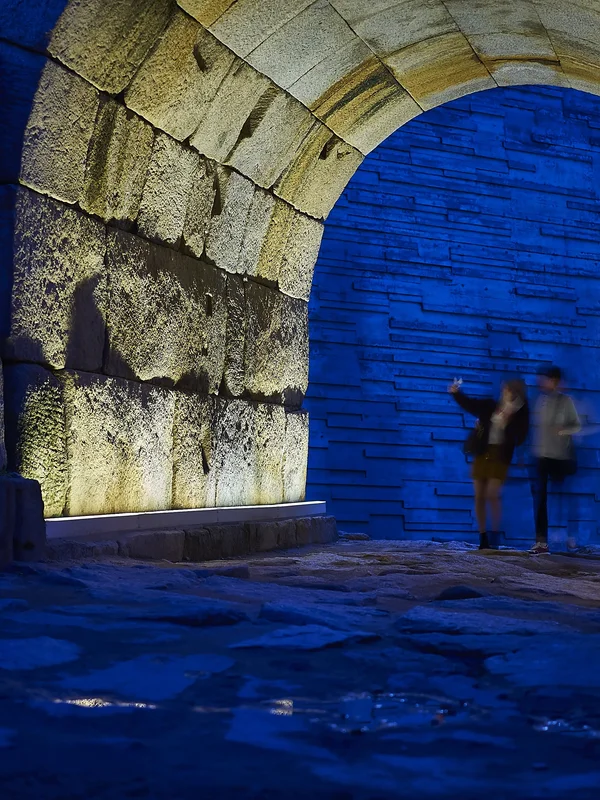
Though made anew, it is a nice and quite picturesque place, especially at night.
Hallim Park is one of the largest parks and botanical gardens on Jeju Island, known for its rich collection of subtropical plants and diverse natural zones. It’s a place where you can explore unique lava caves, relax amid lush greenery, and experience the island’s nature all in one setting.
Maze Land is Jeju’s unique theme park of three mazes built from volcanic stone, inspired by nature, wind, and the island’s haenyeo divers.
Visitors can explore basalt labyrinths shaped like typhoons or stone walls, visit the Puzzle Museum, and enjoy peaceful forest trails surrounded by camellias and ancient trees.
Seongsan Ilchulbong (Korean: 성산일출봉), also known as Sunrise Peak, is a stunning volcanic formation located on the eastern side of Jeju Island. Rising to a height of 182 meters, this natural wonder features a volcanic crater at its summit, offering breathtaking views of the island's landscapes.
Seongsan Ilchulbong is part of the UNESCO World Heritage Site listing under Jeju Island and its lava tubes, recognized for its geological and scenic significance. A visit to this magnificent peak promises an unforgettable encounter with Jeju's natural beauty.
The Spirited Garden is one of the largest bonsai (punjae) gardens in the world, designed as a space of tranquility, contemplation, and harmony. It features hundreds of crafted living artworks surrounded by ponds, stone arrangements, and a carefully designed landscape.
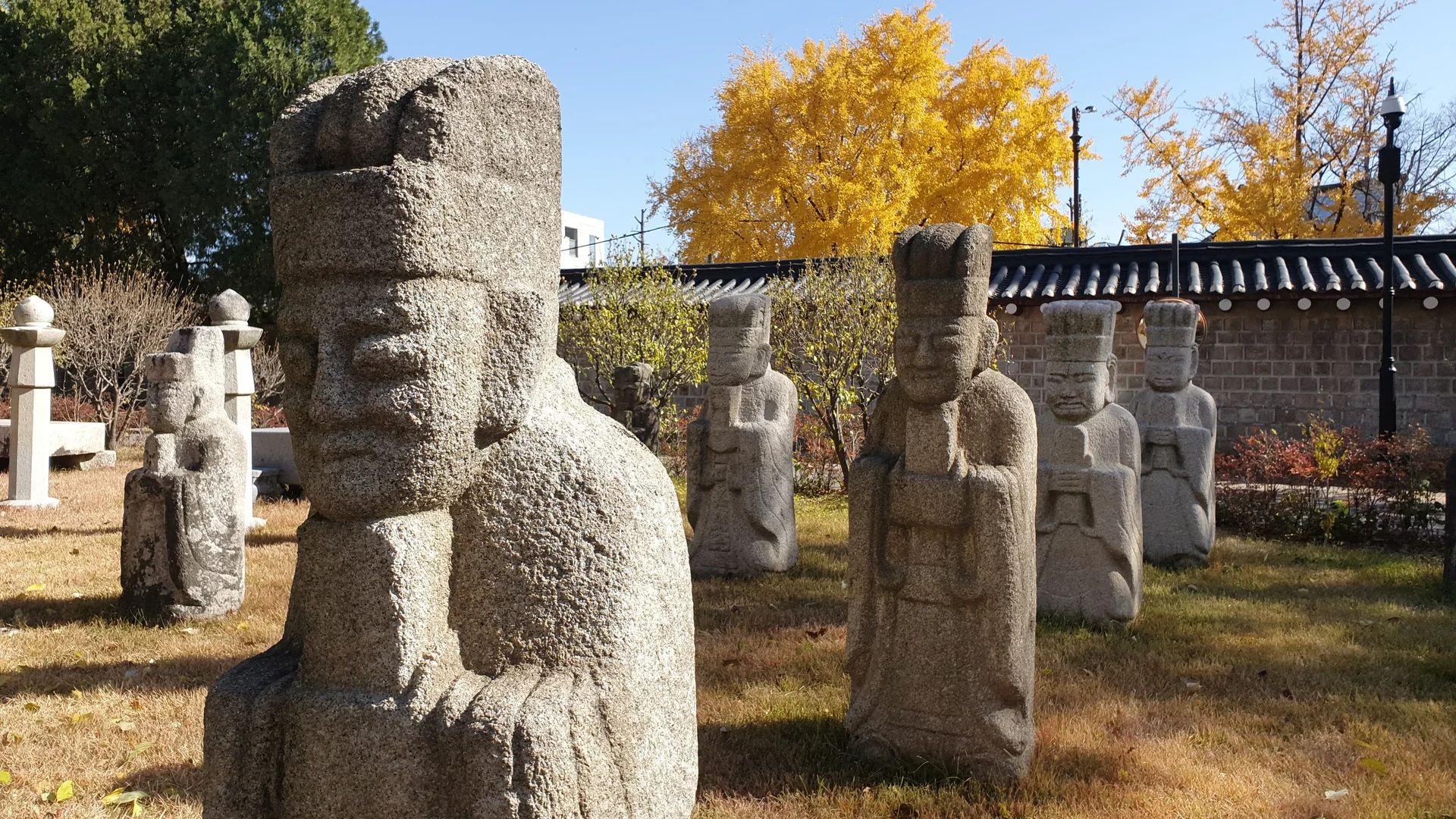
A shrine that houses a portrait of the founder of the Joseon Dynasty, King Taejo (Lee Songye). An extensive complex of buildings, including the sanctuary itself, the state sago archive, a museum, the burial place of the placenta of King Yechzhon, and a complex of auxiliary buildings.
Why and who made portraits of kings, what is a historical archive, why bury the royal placenta - we will try to find answers to these questions in Gyeonggijeong.
Imokte is in a small area called Chaman Graffiti Village; the walls of the houses here are painted by professionals and amateurs: the world of Japanese manga and Korean manhwa; korean alphabet, fantastic, disney cartoon characters, traditional korean stories.
In the very historical center of Jeonju, you will find yourself in a fabulous atmosphere. Traditional Korean hanok houses with tiled roofs line the romantic narrow streets. Here, each house is a unique masterpiece of architecture, reflecting the richness and depth of Korean history.
Walking along these streets, you will notice how each house merges with the surrounding nature and creates a harmonious image. You will see small gardens with flowers, well-kept courtyards, as well as traditional decor elements that recreate the atmosphere of antiquity, and sometimes, on the contrary, remind us of modern design trends.
Recently, it has become fashionable for Koreans and guests of the Land of the Morning Calm to rent stylized costumes - traditional hanbok, or European costumes of the era of the first half of the 20th century, which is closer to us. In Jeonju, you will see many such couples or families looking exotic against the backdrop of historical buildings and traditional hanok houses...
Omokdae-Imokdae
Unfortunately, the Confucians were not very tolerant of Catholicism. We are reminded of this by the Jeonju Catholic Cathedral (built in 1908-1931), located on the site of the executions of Catholics.
OSULLOC Tea Museum on Jeju Island showcases the history and culture of Korean tea amid the island’s vast organic tea fields. Once barren volcanic land, the area was transformed into Korea’s largest organic tea farm. Today, the museum is one of Jeju’s most popular attractions, offering tea exhibitions, tastings, and unique tea products.
Seongeup Folk Village offers a glimpse into Jeju’s authentic island life. Stone houses, thatched roofs, and basalt fences preserve the spirit of old Korea, while locals welcome visitors with omegi-tteok rice cakes and sweet omegi wine made from millet.
Umutgae Coast (우뭇개 해안) offers dramatic ocean views and a glimpse into Jeju’s living tradition. Here, the Haenyeo divers perform their afternoon free-diving show, emerging from the sea with baskets of fresh shellfish — a rare encounter with the island’s true spirit.
A blend of nature and urban design, this stream winds through downtown Seoul — though entirely man-made today.
Once a natural river, it was buried after the Korean War and revived in 2005 as a tranquil walkway.
Fountains, illuminated bridges, and the Palgakdam weir make it one of the city’s most beloved evening spots.
A bustling hub of shopping, street food, and K-beauty.
Amid the trendsetting stores stands Korea’s main Catholic cathedral — a striking symbol of faith and history.
Style meets soul in this lively part of Seoul.
A futuristic glass wave rises above the old City Hall, blending past and future in one bold design.
Powered by nature and home to the world’s largest indoor vertical garden, it’s one of Seoul’s greenest landmarks.
Open to visitors — step inside and see the living wall for yourself.
In the heart of Seoul stands Jogyesa — the head temple of Korea’s largest Buddhist order.
Small in scale but rich in atmosphere, it changes with the seasons: lotus lanterns in spring, bright chrysanthemums in fall, and peaceful stillness in winter.
No matter the time of year, it’s a place of quiet reflection.
In the heart of Seoul stands a hidden architectural gem — a cathedral first envisioned in the 1920s.
A British design, built with Korean devotion, but left unfinished during colonial rule. Then came the miracle: in 1993, the original blueprints were found in an English library.
Finally completed in 1996, the cathedral now stands in its full, intended glory — a story of faith, time, and perseverance.
Insadong is famous for the abundance of souvenir shops, traditional restaurants and tea houses, boutiques.
Insadong-kil Pedestrian Street is the central street of the area.
Often you can see street performances - traditional Korean samul-nori percussion quartet or martial arts tekkyon, taekwon-do or performances of youth groups in the fusion style, etc.
One of the central streets of Seoul, Jongno (literally "Bell Avenue") is named after the pavilion of the same name, which houses the main bell of the country. It is this bell that the best people of the country beat on New Year's Eve.
However, even mere mortals can hit it for good luck: at 12:00 noon, the pavilion is usually opened for visitors. However, a limited number of guests are allowed.
Temple of Bongeunsa is located in close proximity to the COEX Convention and Exhibition Center.
Originally named Gyeongseongsa, it was built by King Wonseong of the Silla Kingdom in the 10th year of his reign (794 AD).
In 1498, thanks to Queen Jeonghyeon, it was renovated and expanded to the east of King Seongjong's tomb, and at that time it was given its new name - Bongeunsa.
The iconic view of COEX is visible from the Maitreya Buddha statue on the temple grounds.
The complex of the central Gwanghwamun Square in front of the Gyeongbokgung Royal Palace, which is the compositional center of the capital of Korea, offers amazing views of Seoul: on one side is the main residence of the kings of the Joseon state (now a museum). But along the Sejong-daero Avenue, departing from the square, there are high-rise modern buildings: government, embassies, Kyobo - the largest bookstore in Korea. Further down the avenue we can see the Seoul City Hall and still further - the Great South Gate of Namdaemun (National Treasure No. 1).
The main palace of the Joseon dynasty — rebuilt more than once, but never lost its grandeur.
Its perfect symmetry, royal guard ceremony, and the chance to wear a hanbok turn your visit into a journey through time.
This breathtaking library in COEX Mall features towering bookshelves and a stunning architectural design. It's an ideal spot for book lovers and those looking for a unique photo backdrop. The natural lighting and open space make it perfect for both wide shots and close-ups.
This statue is a must-visit for fans of PSY's global hit "Gangnam Style." It's a playful spot to capture fun and memorable photos, especially if you strike the famous horse dance pose!
Welcome to K-Star Road, the amazing star road in the heart of Seoul!
K-Star Road, or "Road of the Stars", is a beautiful and popular place where Korean stars seem to have made their mark. As you begin your journey along this road, you will feel the excitement and hype as it passes through the heart of the Gangnam area, known for its trendy atmosphere and emphasis on (K)-pop culture.
Here you will find many GangnamDol figurines representing various Korean stars. Find your heroes - and take a photo with them as a keepsake.
Along K-Star Road you will find many boutiques of world brands. Perhaps those same stars sometimes look into these boutiques too?..
Winding lanes, wooden hanoks, hidden cafés — this is where time slows down.
Samcheong-dong charms with its hills and galleries, while Bukchon preserves the everyday beauty of Joseon-era homes.
Together, they offer a quiet, romantic escape — a walk through history lined with soft light and gentle stories.
Hwaseong is more than just a fortress — it’s a royal dream set in stone. In the late 18th century, King Jeongjo envisioned building a new capital of the Joseon Dynasty here: modern, fortified, and meticulously planned.
The project was designed by the brilliant reformer Jeong Yakyong, one of the leading figures of the “Practical Learning” movement. For the first time in Korean history, both Korean and European engineering techniques were used in construction.
👉 By the way, why did the king never move to his new capital?
The Starfield Library in Suwon is not only a paradise for book enthusiasts but also one of the most popular photography spots in the area. With its impressive bookshelves stretching from floor to ceiling, the library provides a unique backdrop for your photos, making each capture special. This visually stunning cultural hub will be a highlight of your trip to Suwon.
Brief price table.
- Minimum price is a sum of prices of all parts/cities of the tour (Seoul, Yesan-gun, Jeonju, Seogwipo, Busan, Gyeongju, Jeongseon-gun).
- Prices are per person. Actual prices depend on group size, hotel selection, and dates.
- Seasonal pricing configured through December 26, 2026. Booking after this date is possible, but prices require clarification.
Frequently asked questions
In Korean cuisine, there are both spicy and non-spicy dishes. If you prefer non-spicy food, try, for example, kalguksu — homemade noodle soup, or samgyetang — chicken soup with rice and ginseng, or galbitang — a rich beef rib soup.
For meals, budget around $20 per meal for lunch or dinner in a mid-range restaurant. For other daily expenses like transportation, shopping, and entrance fees to attractions, the amount will vary depending on your plans. It’s advisable to have some extra cash for unexpected expenses.
At the airport upon departure, you can exchange Korean won KRW for most world currencies.
In Korea, you can exchange major world currencies (US dollars, yuan, yen, euro) at exchange offices and banks. In addition, the vast majority of sellers (including market traders) accept Visa and Master Card credit cards. Union Pay does not work everywhere! Of course, Korean won is accepted everywhere too! Of course, Korean won is accepted almost everywhere too! "Almost": recently cafes and other establishments have appeared, for example, the Busan Aquarium, where payment can only be made by credit card.
For convenience, we recommend exchanging your currency in Seoul or immediately upon arrival at the airport. Even in Busan, where there are also currency exchange offices, searching for an exchanger can take up extra time that you could spend on more useful activities.