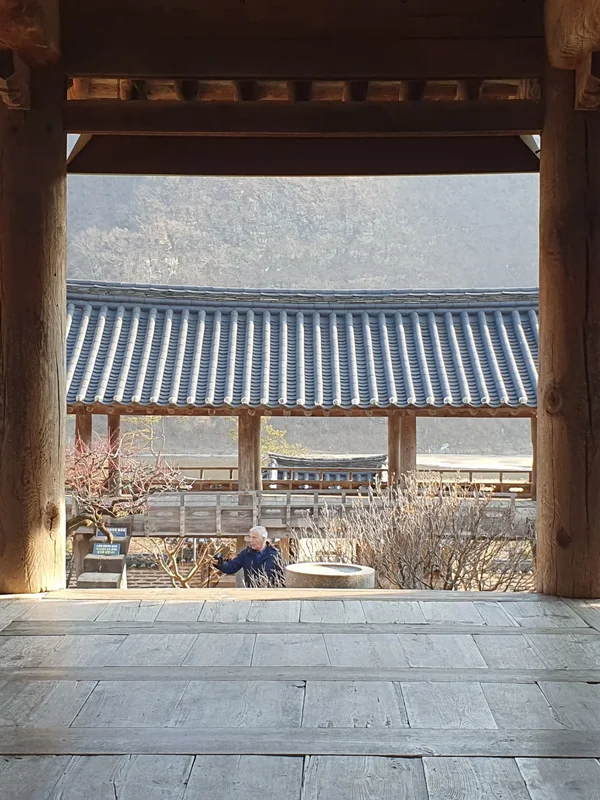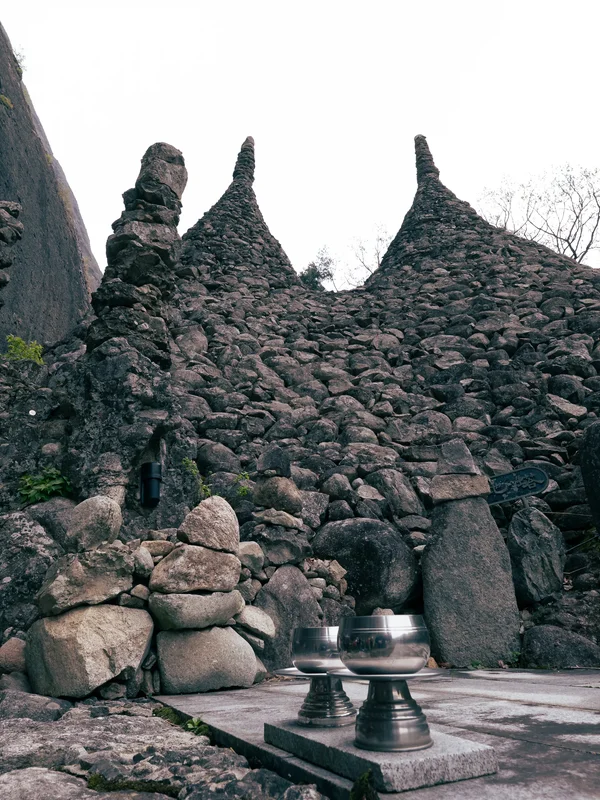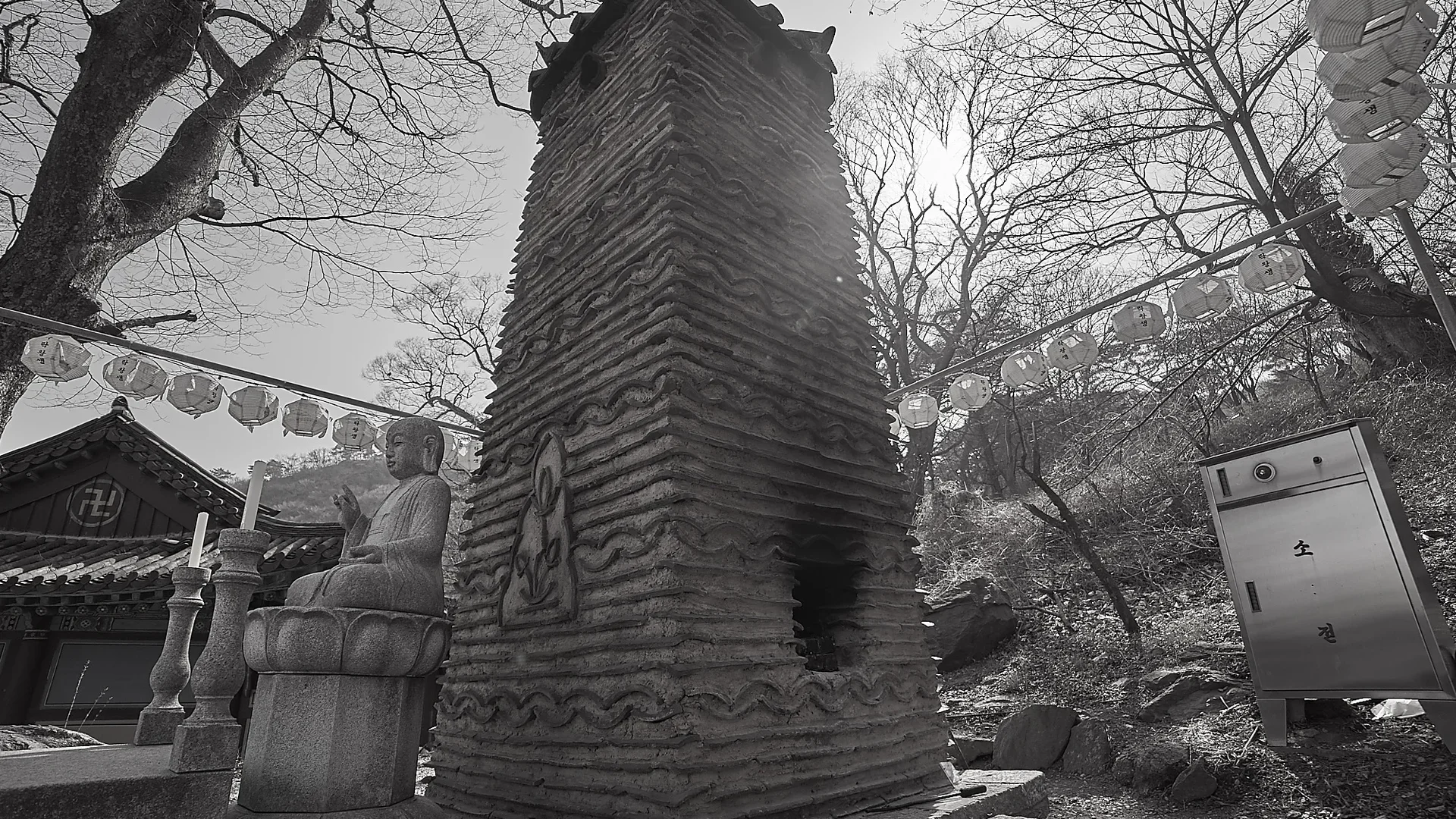
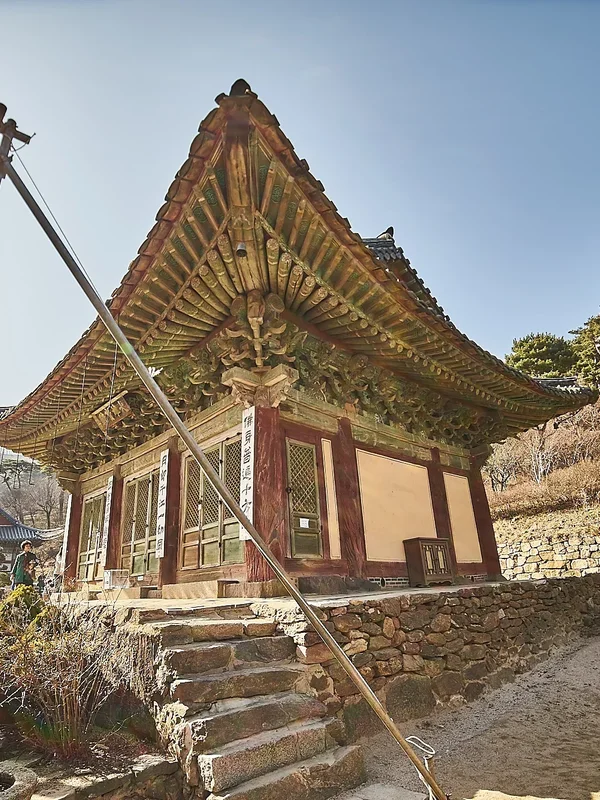
Standing before the Bugeunri dolmen, you reach out and touch a capstone laid in place three thousand years before writing came to Korea — the stone is cold, slightly rough, and utterly matter-of-fact about its age. Inside Cheondeungsa's main hall, incense smoke drifts past carved eaves that have been replaced, repaired, and repainted since 381 CE — the monk Ado Hwasan chose this hillside when Rome still had emperors, and the forest around the temple feels exactly that old. On the third floor of the Ganghwa Peace Observatory, you press binoculars to your face and the Gaepung Plain fills the lens — a landscape that looks ordinary from a distance but carries the full weight of a peninsula still technically at war.
The experience
About this day
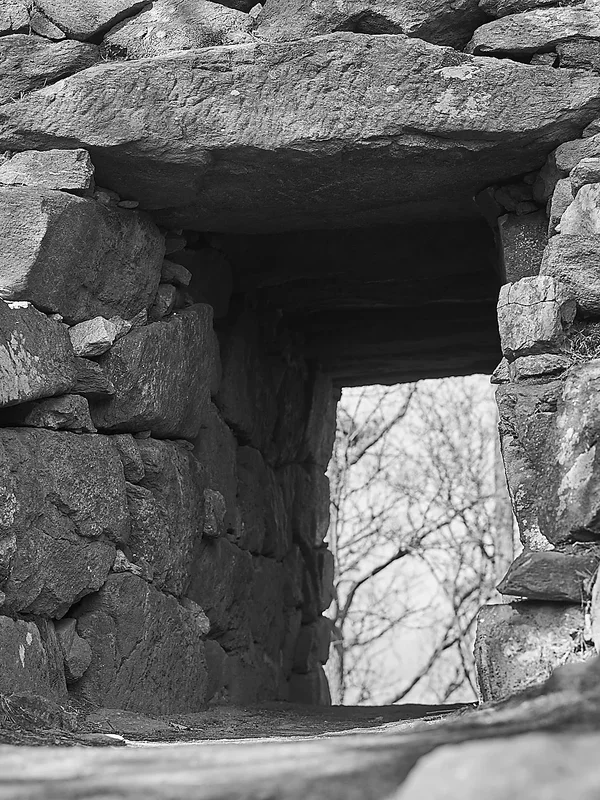
Ganghwa Island packs five thousand years of Korean history into a single day — Bronze Age dolmens listed by UNESCO, medieval Goryeo fortresses built to hold off Mongol and Manchu invasions, Korea's oldest Buddhist temple at Cheondeungsa, and a peace observatory standing just 2.3 km from the North Korean border. The island's layered past — refuge of kings, seat of a wartime Goryeo capital, site of the 1876 Ganghwa Treaty that cracked open Korea to the world — gives every landmark a weight you rarely feel in a city museum. En route through the Ganghwa History Museum, the founding myth of Tangun threads the whole arc together, from prehistoric megalithic culture to the peninsula's unresolved modern division.
The journey
What you will see
Cheondeung-sa Temple
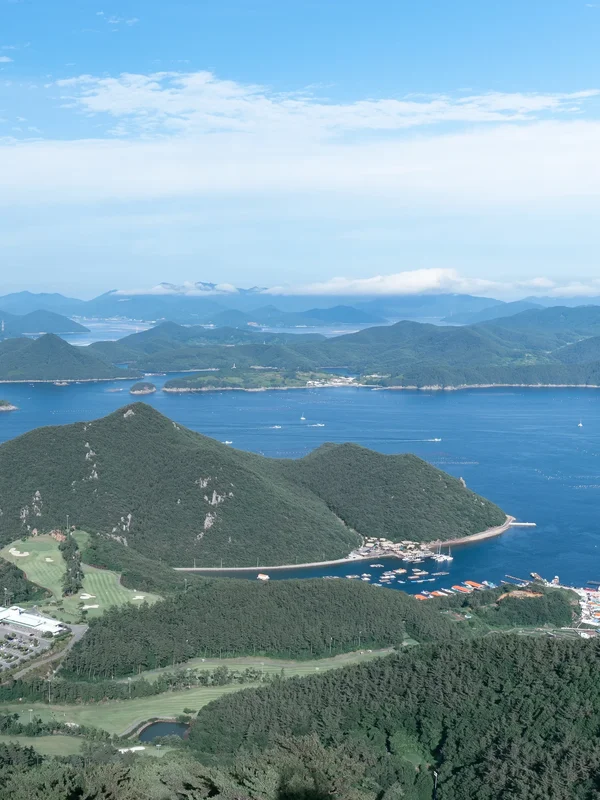
Ganghwa Peace Observatory
Also on this route: Ganghwa Bugeunri Dolmen Site · History Museum of Ganghwa-do
Practicalities
What is included
Included
- chartered transportation
- licensed guide
- Entrance fees as per the stated itinerary
Not included
- lunch
Where you go