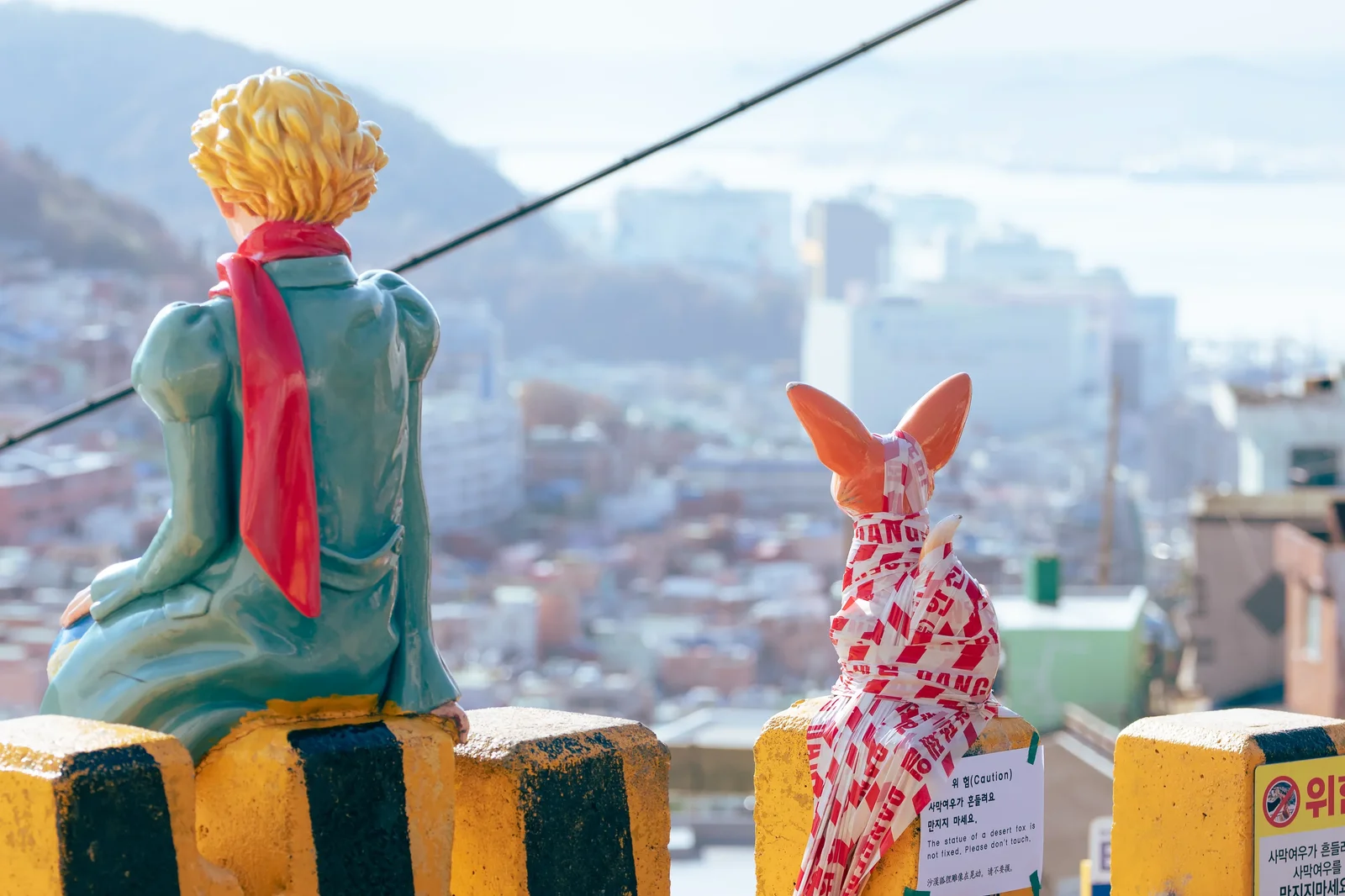
South Korea transformed from a war-ravaged agrarian society into one of the planet's most densely urbanised nations in roughly two generations. Understanding that shift — and what it means for Korean daily life — helps any traveller make sense of what they see: the endless apartment towers on the outskirts of every city, the eerily quiet village roads in the countryside, and the satellite towns that mushroomed between Seoul and its neighbours.
How Urbanisation Happened
The story begins with devastation. The Korean War (1950–1953) left roads, bridges, and homes in ruins across the peninsula. The late 1950s brought reconstruction and, crucially, the first factories. Young people from rural provinces flooded into those factory towns looking for work — and never went back. By the 1970s, more than half of South Korea's population already lived in cities. Today that figure stands at approximately 90 % (some estimates put it at 92 %).
The administrative landscape changed with the people. Korean cities are officially classified by population size:
Population threshold | Administrative unit | Examples |
|---|---|---|
Under 200,000 | Gun (county / 군) | Rural counties |
200,000 + | Si (city / 시) | Most provincial cities |
1,000,000 + | Gwangyeoksi (metropolitan city / 광역시) | Busan, Daegu, Gwangju, Daejeon, Ulsan |
10,000,000 + | Teukbyeolsi (special city / 특별시) | Seoul (서울특별시) |
Korea's five major metropolitan cities — Busan (부산), Daegu (대구), Gwangju (광주), Daejeon (대전), and Ulsan (울산) — each have populations exceeding one million.
The Seoul Capital Area: 12 % of Land, 50 % of People
The most striking statistic in Korean geography is this: the Seoul Capital Area (수도권) — Seoul, Incheon, and Gyeonggi Province — covers only about 12 % of the country's land but is home to roughly 50 % of its population.
Breaking that down (approximate 2026 figures):
Region | Population |
|---|---|
Seoul (서울) | ~9.4 million (once exceeded 10 million) |
Gyeonggi Province (경기도) | 13 million + |
Incheon (인천) | ~3 million |
Total | ~26 million out of ~51 million |
A popular Korean analogy captures it well: "Seoul is the egg yolk; Gyeonggi Province is the egg white."
To absorb the overflow from Seoul, the government developed satellite and new towns in Gyeonggi Province. Each serves a specific function:
Function | New town / satellite city |
|---|---|
Residential (flagship) | Bundang (분당) · Ilsan (일산) |
Administrative | Gwacheon (과천) |
Industrial | Ansan (안산) · Bucheon (부천) |
Military | Dongducheon (동두천) · Osan (오산) · Pyeongtaek (평택) |
More recently, a counter-urbanisation trend (역도시화) has emerged: some residents — tired of city congestion, cost, and pollution — are voluntarily moving back to smaller towns and rural areas. This trend is gradually gaining momentum.
Urban Problems and How Korea Tackles Them
Rapid urbanisation brought predictable growing pains. Korea has developed systematic responses to three main clusters of problems:
Problem | Policy responses |
|---|---|
Traffic congestion | Public transport expansion, transfer fare discounts, dedicated bus lanes, congestion pricing, car-sharing schemes |
Environmental pollution | Energy conservation programmes, single-use item regulations, strict waste sorting |
Housing shortage | Public rental housing, new-town construction, urban redevelopment |
Urban Redevelopment: The Ganggangyi Village Story
One of the most cited redevelopment success stories is Ganggangyi Village (깡깡이 마을) in Yeongdo-gu (영도구), Busan (부산) — the site of Korea's very first shipyard. When the shipbuilding industry relocated to Ulsan (울산) and Geoje (거제), the factories closed, the population shrank, and the neighbourhood fell into decline.
The city's solution: convert the area into an open-air museum and cultural street, turning industrial heritage into a tourism draw. This model — giving a decayed urban area a new economic function — is the textbook definition of urban redevelopment (도시 재개발).
In Seoul, the equivalent tool is regulatory relaxation: allowing buildings to be rebuilt taller (from 10 storeys up to 20 or 30), which makes redevelopment commercially viable without turning every neighbourhood into a museum piece.
It's worth noting that redevelopment decisions move slowly: once a safety inspection team flags a building as dangerous, the formal decision to redevelop can still take 15 to 30 years to actually begin.
Korea's Waste-Sorting System
One urban policy that surprises many visitors is how seriously Korea takes waste separation (분리수거). The reason is practical: Korea has limited natural resources, so recycling is economically necessary. A useful rule of thumb locals use: "Can a child eat it? → Food waste. Can't a child eat it? → General waste." Chicken bones go in the general bin; soft fish bones go in the food-waste bin. Food-waste in Korea is processed into animal feed for cattle and pigs.
Rural Korea: A Different Country
While cities dominate the headlines, rural Korea (농촌) tells a quieter, more complex story.
Since the 1960s, the rural population has been in steady decline as people moved to cities. By 2022 (National Statistics Office data), the rural population stood at approximately 2.17 million people — just 9.4 % of the total population. The demographic profile is striking: about 47 % of rural residents are aged 65 or older.
Rural communities are distinctive in other ways too. Long-term residents who have known each other for decades make for unusually close-knit social fabric. Villages typically share infrastructure you won't find in cities:
Facility | Role |
|---|---|
Village community hall (마을 회관) | Meeting place, recreation, local governance |
Agricultural storage warehouse (농산물 저장 창고) | Holding produce post-harvest until prices rise (especially apples and grains) |
Rice mill (정미소) | Separating rice husks from grain to produce white rice |
Irrigation channel (인공 수로) | Supplying paddy fields with water even far from natural rivers |
How Rural Korea Is Adapting
Rural communities are not passive in the face of demographic pressure. Several strategies are reshaping village life:
Returning to farming (귀농). An increasing number of city dwellers — often retirees or remote workers — are voluntarily relocating to rural areas to farm. This is a recognised social trend with government support programmes.
Direct sales via the internet. Villages now run their own online storefronts, cutting out middlemen and selling produce directly to urban consumers.
Agritourism and farm experiences. City families and school groups visit farms to pick strawberries, watermelons, or other seasonal produce. From the farm's perspective this is smart economics: hiring workers to pick the crop costs money (and can run at a loss), while charging visitors to pick it themselves generates stable income. Villages often spin this into local festivals — a watermelon village hosts a watermelon festival, for example.
Agricultural automation. AI-powered farming machinery and strawberry-picking robots are being deployed to compensate for an ageing workforce.
Better connectivity. Improving access to hospitals, cultural facilities, and digital services by strengthening links to nearby cities and providing internet literacy education for older residents.
Seasonal Foreign Workers: Filling the Labour Gap
Perhaps the most distinctive policy response to rural labour shortages is the seasonal foreign worker programme (외국인 계절 근로자 제도). Foreign nationals are assigned to specific farms on short-term contracts. There are two main recruitment channels:
- Family members (within 4th-degree kinship) of marriage migrants already residing in Korea.
- Workers selected by local governments in countries that have signed an MOU (Memorandum of Understanding) with Korean local authorities.
The permitted stay was originally 5 months. In May 2023 it was extended to a maximum of 8 months — a change driven by practical need: rice cultivation runs from roughly March to October (7 months), and a 5-month visa meant workers had to leave before the harvest was done. Coastal and deep-sea fishing communities have since requested similar extensions, currently under review by the Ministry of Justice.
If you're planning a rural experience in Korea, the government portal 농어촌 알리미 (alimi.or.kr) lists agritourism villages across the country, with activities ranging from rice planting and fruit picking to making gochujang (고추장), tofu, and tteok (떡).
What This Means for Travellers
Korea's urban-rural split is not just a sociology textbook fact — it shapes what you'll actually experience on the ground. The mega-dense, hyper-convenient Seoul Capital Area and the five major metropolitan cities offer one kind of Korea: 24-hour convenience stores, world-class public transport, and skyscraper horizons. The countryside offers another: slower rhythms, seasonal festivals tied to harvests, temple stays, and a hospitality that comes from communities where everyone knows everyone. Both are worth your time — and increasingly, Korea's own policy is nudging travellers in both directions.
Korea has a housing market unlike anywhere else in the world — dominated by high-rise apartments, shaped by a unique deposit-based rental system called jeonse, and layered with legal protections most foreigners have never heard of. Whether you're planning a long stay or simply curious about Korean city life, we break down every housing type, rental format, and tenant right you need to know.
Korea is beautiful at any time of year – but each of them offers something special. In the spring, cherry blossoms bloom, in the summer, beaches open, in the fall, gold in the mountains, and in the winter, ski resorts await. In this article, we tell you when is the best time to go in 2025 – taking into account the weather, key events and seasonal prices for tours.
Six hours across Korea's most sea-sculpted city — where a wartime village became an open-air gallery and the fish market never sleeps.